Pennsylvania Must Act Now on E-Scooter Warnings and School-Zone Speed Cameras
As the holiday season approaches, Pennsylvania families are purchasing electric scooters marketed as toys and transportation for children—even though most of these devices are illegal to operate on public roads and sidewalks. At the same time, thousands of students lack safe walking and biking routes to school due to speeding traffic and limited enforcement tools.
This article brings together the most important research, safety statistics, and public-policy findings to explain why Pennsylvania urgently needs school-zone speed cameras and mandatory e-scooter safety disclosures—without legalizing scooter operation.
1. E-Scooter Injuries Are Rapidly Increasing—CHOP Data Shows the Trend
Children’s Hospital of Philadelphia (CHOP) reports a more than 70% increase in pediatric e-scooter injuries in a single year. Most injuries occurred when:
- children rode on public roads or sidewalks, where scooters are not legal
- helmets were not worn
- scooters accelerated unexpectedly or collided with vehicles
CHOP also warns that scooters create risks for:
- younger children with limited judgment
- non-riders, including elderly and disabled pedestrians
- school commuters, who may copy what they see friends doing
These injuries are not random—they reflect predictable dangers of an unregulated motorized device sold to families without required warnings.
2. Other Countries Are Backing Away From Scooters—Due to Injuries and Sidewalk Hazards
Across the world:
- Paris, France ended shared e-scooter programs after serious injuries and fatalities
- Germany, Ireland, and Spain increased restrictions
- UK trials were halted or redesigned due to hospital overload
Cities that originally embraced scooters are now documenting:
- alarming collision rates
- sidewalk injuries to older adults
- broken ankles, hips, and wrists from scooters left blocking pathways
- rising insurance and enforcement burdens
The pattern is unmistakable:
E-scooters create a net increase in injuries, especially for children and pedestrians.
3. Canada’s National Disability Report: Scooters Endanger Disabled and Elderly Pedestrians
A major Canadian study found that e-scooters pose a disproportionate risk to:
- wheelchair users
- blind and low-vision pedestrians
- older adults
- people using walkers or canes
The findings include:
- Scooter riders routinely use sidewalks, even where prohibited.
- Crashes cause severe falls in older adults.
- Small wheels cause unpredictable wobbling, increasing collision risk.
- Parked scooters block mobility-device routes, violating ADA and AODA accessibility norms.
This is especially important for Pennsylvania, where many communities have:
- high populations of older adults,
- school zones with large disabled-student populations,
- Shared-use paths already required under Act 34.
4. Mobility Devices vs. E-Scooters: Not Comparable
Many parents and some lawmakers mistakenly believe e-scooters are “just like” mobility scooters. They are not.
Mobility Scooter / Power Wheelchair:
- Max speed: ~5 mph
- Seatbelts: Required
- Design: Medical-device stability standards
- Purpose: ADA mobility assistance
- Operation: Safe on sidewalks
E-Scooter:
- Max speed: 15–20+ mph
- Seat / belts: None
- Wheel size: Very small → high instability
- Purpose: Recreational/commuter device
- Operation: Illegal on PA roads/sidewalks
These distinctions are crucial to protecting disabled pedestrians from collisions and blocked pathways.
5. Bicycles Are the Only Legal, Safe, Age-Appropriate Alternative
Pennsylvania law clearly states:
- Traditional bicycles are legal transportation
- Electric-assist bicycles are recommended for ages 16+
- Helmets reduce head injury risk by 45–85%
- Bicycling promotes real exercise—scooters do not
Bicycles advance:
- cardiovascular health
- motor planning and coordination
- active transportation habits
- Safe Routes to School goals
- physical, mental, and community health
Scooters replace walking/biking with sedentary standing, offer no exercise benefit, and increase injury burden.
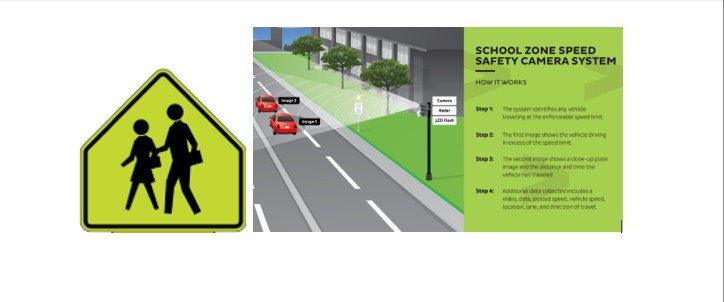
6. Why Pennsylvania Needs School-Zone Speed Cameras—The Research Is Overwhelming
Traditional enforcement—signs, paint, police, flashing lights—does not work to reduce school-zone speeding.
University of North Carolina Highway Safety Research Center findings:
- 85–95% of drivers continue speeding in school zones
- Speeding returns immediately after police leave
- Signage and education have no sustained effect
- Automated speed enforcement produces:
- large, durable drops in speeding
- major reductions in extreme-speed crashes
- long-term driver behavior change
Philadelphia’s program confirms this:
- Fatal and severe crashes dropped significantly in speed camera zones
- Violations dropped more than 90% over time
- General motorist behavior improved even outside camera zones
Yet Pennsylvania does not allow speed cameras in school zones—even though it allows automated bus-arm cameras under Act 159.
This contradiction leaves children unprotected on their walk or bike to school.
Why speed cameras matter:
- They create safe walking and biking access
- They reduce car congestion around schools
- They help districts meet federal wellness-policy requirements
- They protect disabled pedestrians and older adults
- They prevent deaths before they occur
If PA truly wants students to walk and bike safely, speed cameras are essential.
Call to Action: Send This Letter to Every PA Legislator Parents, teachers, nurses, Safe Routes advocates, disability organizations, and public-health partners are urged to copy, write your own share, or download the following form letter and send it to your State Representatives and Senators.